
I recommend West From Singapore and Fair Blows The Wind, but you can learn all about Louis L'Amour's fictional and real-life adventures at this great website:
L'Amour Adventures

For my nonfiction blog: empireofthewheel.blogspot.com


 " In March 1898 the British started building a railway bridge over the Tsavo River in Kenya. The project was led by Lt. Col. John Henry Patterson. During the next nine months of construction, two maneless male Tsavo lions
stalked the campsite, dragging Indian workers from their tents at night
and devouring them. Crews tried to scare off the lions and built
campfires and bomas of thorn
fences around their camp for protection to keep the maneaters out, to
no avail. The lions crawled through the thorn fences. After the new
attacks, hundreds of workers fled from Tsavo, halting construction on
the bridge. Patterson set traps and tried several times to ambush the
lions at night from a tree. After repeated unsuccessful endeavors, he
shot the first lion on December 9, 1898, with a Martini-Enfield .303 caliber rifle. Three weeks later, the second
lion was found and killed. The first lion killed measured nine feet,
eight inches (3 m) from nose to tip of tail. It took eight men to carry
the carcass back to camp. The construction crew returned and completed
the bridge in February 1899. The exact number of people killed by the
lions is unclear. Patterson gave several figures, claiming that there
were 135 victims" (Wikipedia)
" In March 1898 the British started building a railway bridge over the Tsavo River in Kenya. The project was led by Lt. Col. John Henry Patterson. During the next nine months of construction, two maneless male Tsavo lions
stalked the campsite, dragging Indian workers from their tents at night
and devouring them. Crews tried to scare off the lions and built
campfires and bomas of thorn
fences around their camp for protection to keep the maneaters out, to
no avail. The lions crawled through the thorn fences. After the new
attacks, hundreds of workers fled from Tsavo, halting construction on
the bridge. Patterson set traps and tried several times to ambush the
lions at night from a tree. After repeated unsuccessful endeavors, he
shot the first lion on December 9, 1898, with a Martini-Enfield .303 caliber rifle. Three weeks later, the second
lion was found and killed. The first lion killed measured nine feet,
eight inches (3 m) from nose to tip of tail. It took eight men to carry
the carcass back to camp. The construction crew returned and completed
the bridge in February 1899. The exact number of people killed by the
lions is unclear. Patterson gave several figures, claiming that there
were 135 victims" (Wikipedia)
 Three adventure films have been produced from this story, each varying from the facts. In 1952, Arch Oboler made a 3D picture titled Bwana Devil. Starring Robert Stack, Nigel Bruce and Barbara Britton, this one sets the story in the early 20th Century, in British East Africa. Workers building Africa's first railroad must already endure intense heat and sickness when the lions start making trouble. Characters Jack Hayward and
Dr. Angus Ross head up the venture and are none too happy about a pair of man-eating lions on the rampage and interfering with their progress. Hayward's attempts to curtail the slaughter prove unfruitful, the lions continue to feast at will. That's when the home office sends three big-game hunters
to dispatch with these pesky lions, and they bring Jack's wife to complicate things a little further for him. Unfortunately for the game hunters, they
are hunted and killed by the lions. Having had enough, Jack sets out to kill them. His face-off with the lions gives him a chance to save his wife and make points with her.
Three adventure films have been produced from this story, each varying from the facts. In 1952, Arch Oboler made a 3D picture titled Bwana Devil. Starring Robert Stack, Nigel Bruce and Barbara Britton, this one sets the story in the early 20th Century, in British East Africa. Workers building Africa's first railroad must already endure intense heat and sickness when the lions start making trouble. Characters Jack Hayward and
Dr. Angus Ross head up the venture and are none too happy about a pair of man-eating lions on the rampage and interfering with their progress. Hayward's attempts to curtail the slaughter prove unfruitful, the lions continue to feast at will. That's when the home office sends three big-game hunters
to dispatch with these pesky lions, and they bring Jack's wife to complicate things a little further for him. Unfortunately for the game hunters, they
are hunted and killed by the lions. Having had enough, Jack sets out to kill them. His face-off with the lions gives him a chance to save his wife and make points with her.
 The third film based upon the Tsavo maneaters events is the only one that attempts to tell the real story. The 1996 release The Ghost And The Darkness stars Val Kilmer as John Patterson and Michael Douglas as a fictional master hunter. In this film, Patterson is the engineer brought in to finish a railroad bridge after lion attacks have caused the project to derail. Though Patterson dispatches with one lion early after his arrival, it is the Tsavo maneaters who begin to cause much more mayhem shortly after. This movie veers from fact when it has Patterson enlist the aid of the mystical Yankee game hunter portrayed by Douglas to help him hunt down the animals who have been picking off his men seemingly for sport. It gets creepy when they discover that the lions have been keeping trophies of their kills. After Patterson gleans much wisdom from his experience hunting with the cynical and haunted master hunter, the lions are finally brought down, but not without sacrifice.


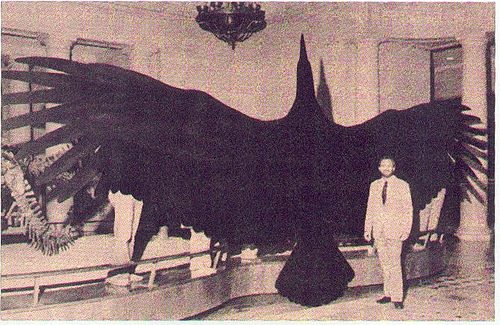 "Among the most controversial reports is a July 25, 1977 account from Lawndale, Illinois.
About 9 P.M. a group of three boys were at play in a residential back
yard. Two large birds approached, and chased the boys. Two escaped
unharmed, but the third boy, ten-year-old Marlon Lowe, did not. One of
the birds reportedly clamped his shoulder with its claws, then lifted
Lowe about two feet off the ground, carrying him some distance. Lowe
fought against the bird, which released him."
"Among the most controversial reports is a July 25, 1977 account from Lawndale, Illinois.
About 9 P.M. a group of three boys were at play in a residential back
yard. Two large birds approached, and chased the boys. Two escaped
unharmed, but the third boy, ten-year-old Marlon Lowe, did not. One of
the birds reportedly clamped his shoulder with its claws, then lifted
Lowe about two feet off the ground, carrying him some distance. Lowe
fought against the bird, which released him."

 Usually attributed to an alleged letter written in the late 19th Century by a man named Carle Liche, which was reportedly printed in many journals of the day. According to this letter, Liche had been invited to a ritual by the cave-dwelling Mkoko tribesmen of Madagascar. Taken to a bend in a jungle river, Liche saw one of these dreaded brown man-eating trees growing 8 feet tall and shaped like a pineapple. With 12-foot leaves growing from the top and drooping to the ground, this hideous thing had spikes in its exposed sides and tendrils waved out from within. Liche wrote that he witnessed the woman to be sacrificed climbing to the top of the tree where she drank an oozing green liquid produced by the tree. As she drank, the long leaves wrapped around her body, enclosing her. The next thing Liche knew, the green fluid and the woman's blood were flowing down the tree and the Mkoko men began to enthusiastically lap it up like dogs. This intoxicated them into a 'hideous orgy' in which Liche elected not to participate.


 Lately I've been Netflixing travel vids and the most recent was another in the Rudy Maxa series. I recommend this series, if you haven't seen it. Rudy makes a good presentation and, like Rick Steves (a favorite of mine), Rudy knows how to ferret out those interesting facets of a destination that can make the experience.


 Posts
All Comments
Posts
All Comments


